Best Backsplash Materials For Busy Family Cooking Zones
Discover the best backsplash materials for busy family kitchens. Compare durability, cleaning ease, and style to find the perfect fit for your cooking zone.
Why Busy Kitchens Need Smart Backsplash Choices
Family kitchens face daily chaos—splattering oil, spaghetti sauce accidents, and little hands leaving sticky fingerprints everywhere. The right backsplash protects your walls while enduring constant abuse. Unlike counter tops or cabinets, backsplashes take the brunt of cooking messes, so choosing a durable, low-maintenance material directly impacts your sanity. With that in mind, let’s explore which options truly hold up under real family life.
Ceramic and Porcelain Tile: The Time-Tested Workhorse
Starting with the most popular choice, ceramic and porcelain tile remain the gold standard for busy kitchens. To begin with, these materials resist stains, scratches, and heat with ease. Furthermore, glazed surfaces wipe clean in seconds, and the wide variety of colors, shapes, and patterns lets you match any design style. Beyond that, porcelain offers even greater density and water resistance than ceramic, making it ideal for behind sinks and stove tops. The only drawback? Grout lines can trap grime, but using darker grout or epoxy-based options minimizes this issue significantly.
Glass Tile: Sleek Style Meets Easy Cleaning
Moving from traditional tiles to something more contemporary, glass tile delivers stunning results for homeowners who prioritize both beauty and practicality. For one thing, its non-porous surface repels stains and resists bacteria growth, so you simply wipe away splatters without scrubbing. In addition, glass reflects light beautifully, making small kitchens feel brighter and more spacious. Nevertheless, glass tile costs more than ceramic and requires professional installation for best results. Along similar lines, choose frosted or textured glass over clear varieties—they hide water spots and cooking residue much better.
Natural Stone: Timeless Beauty with Extra Care
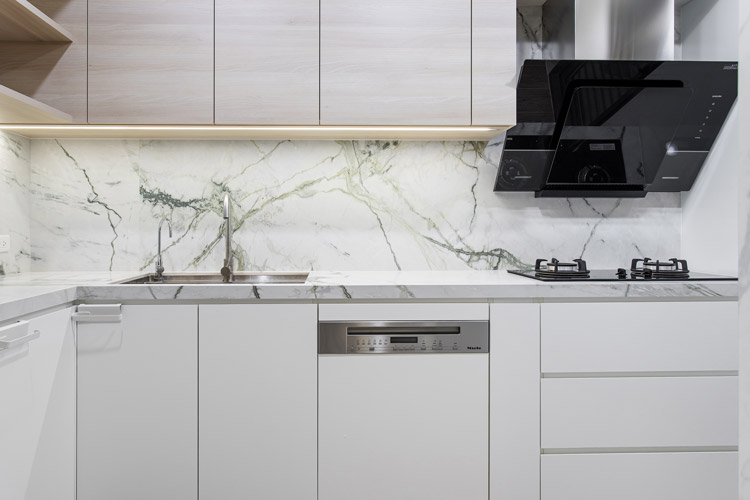
For those drawn to organic textures, natural stone—marble, granite, slate, or travertine—adds unmatched warmth and character to any cooking zone. On the positive side, granite and slate stand up well to heat and scratches, while marble offers elegant veining that elevates the entire space. Despite these benefits, however, stone demands regular sealing to prevent staining, especially near stove tops where oil splatters occur frequently. In light of this, darker stones like slate or soapstone hide wear better than light marbles for busy families. Therefore, consider this option only if you’re willing to invest in periodic maintenance for long-term beauty.
Stainless Steel: Commercial-Grade Durability
Shifting from earthy materials to industrial chic, stainless steel brings professional kitchen toughness right into your home. First of all, this material resists heat, moisture, and impact like no other. Moreover, grease wipes off effortlessly, and the seamless surface leaves no grout lines to collect debris. After all, commercial kitchens rely on stainless steel for good reason. That said, fingerprints and smudges show up clearly, so choose brushed or matte finishes to minimize visibility. On top of that, a magnetic knife strip on the backsplash adds extra function, too.
Quartz: Engineered for Family Life
In contrast to natural stone, quartz backsplashes offer the beauty of stone without the maintenance headaches. Specifically, this engineered material contains crushed stone mixed with resin, creating a non-porous surface that never needs sealing. As a result, quartz resists stains, scratches, and heat remarkably well, and cleaning requires only soap and water. What’s more, it’s available in countless colors and patterns, mimicking marble, concrete, or solid hues effortlessly. Keep in mind, though, that quartz costs more than ceramic tile and may discolor under prolonged direct sunlight.
Peel-and-Stick Vinyl: Budget-Friendly and Quick
For families on a tight timeline or budget, peel-and-stick vinyl backsplash tiles provide an instant upgrade. To start, these adhesive panels install in hours without grout, mortar, or professional tools. In addition, they resist moisture and wipe clean easily. Beyond that, many modern designs convincingly mimic subway tile, marble, or geometric patterns. On the downside, however, vinyl cannot withstand high heat—so keep it away from stove tops and ovens. For this reason, consider it a temporary solution or a renter-friendly option until you commit to permanent materials.
Brick and Thin Brick Veneer: Rustic Charm
On the other end of the style spectrum, exposed brick or thin brick veneer brings cozy, farmhouse warmth to family cooking zones. For one, brick handles heat beautifully and hides minor scuffs well. At the same time, its textured surface adds visual interest and pairs wonderfully with open shelving. The flip side, though, is that brick is porous, so you must seal it thoroughly to prevent oil and sauce stains. Consequently, cleaning requires a stiff brush and mild cleaner rather than a simple wipe. Given these factors, use brick as an accent behind open shelving or range hoods, not directly behind fry-heavy stove tops.
Comparing Maintenance Across Materials
Now that we’ve covered each material’s strengths, let’s turn our attention to upkeep. When evaluating backsplash options, always factor in daily cleaning routines. For example, ceramic and glass tile need only a damp cloth and gentle cleaner. In contrast, stainless steel requires special wipes to avoid streaks. Meanwhile, natural stone and brick demand sealing every one to two years. For the busiest households, non-porous materials like quartz, glass, and glazed ceramic save the most time and effort. In the end, match your maintenance willingness with the material’s demands—honesty here prevents future regrets.
Making the Final Decision for Your Family
Bringing everything together, choosing the best backsplash boils down to balancing durability, maintenance, style, and budget. To begin with, assess your cooking habits honestly. Do you fry often? Then choose heat-resistant materials like stainless steel or ceramic tile. Do young children help in the kitchen? In that case, opt for non-porous, easy-wipe surfaces like glass or quartz. Above all, always order samples and test them at home—smear tomato sauce or oil on each sample and let it sit overnight. After all, real-world testing reveals which material truly fits your family’s lifestyle.