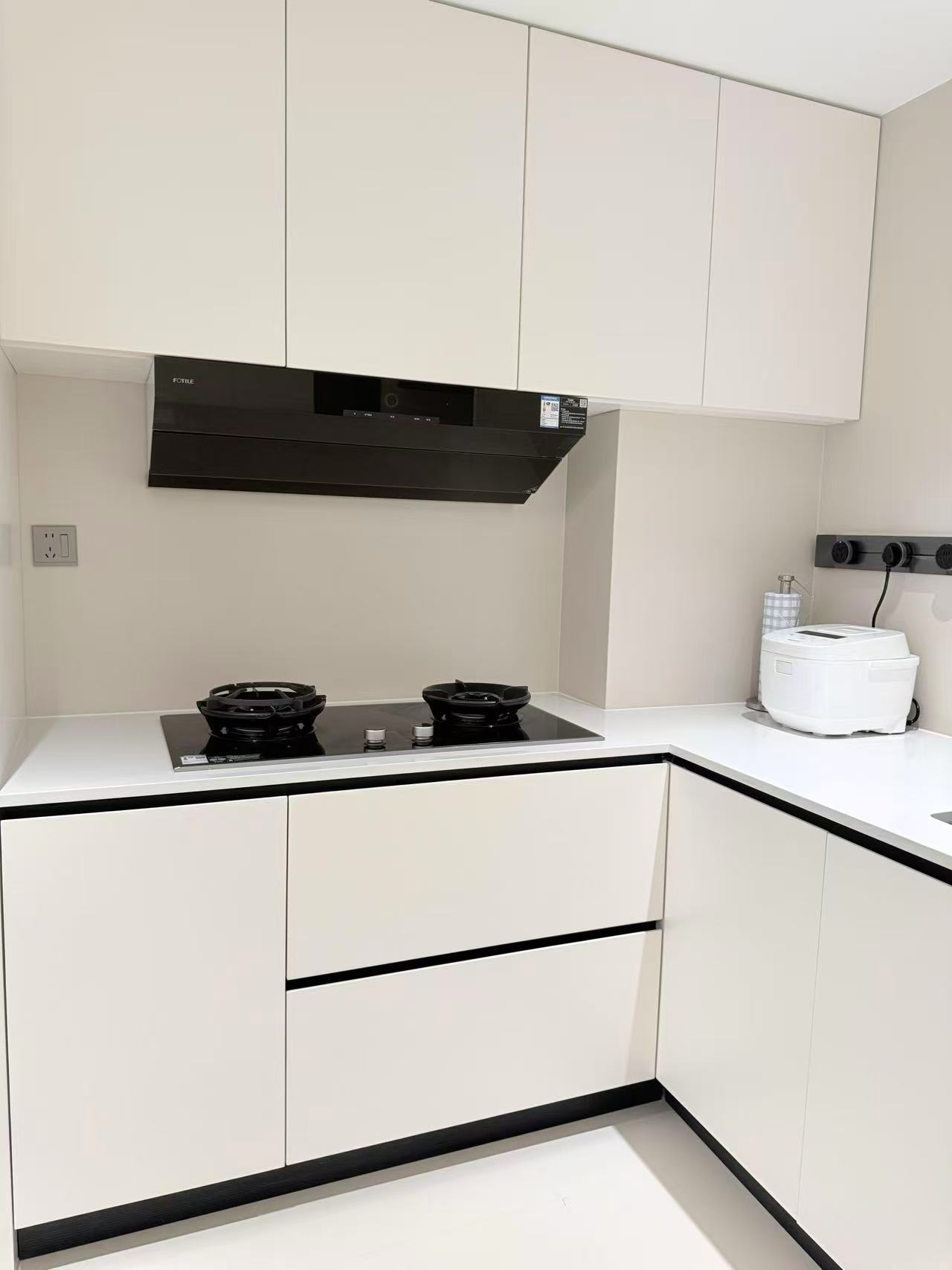
What’s the Purpose of Black Toe Kicks Under Kitchen Cabinets?
When renovating a kitchen, few notice the thin black strip at the cabinet base. Yet this small detail affects both durability and the overall look of your space.
The Real Job of a Black Toe Kick: More Than a Dust Cover
The toe kick (also called plinth or kickboard) sits at the base of kitchen cabinets. Many assume it’s just there to hide the gap underneath. In reality, it does much more practical work.
Kitchen floors often see water spills, grease splashes, and mopping residue. Without a toe kick in place, moisture can seep directly into the cabinet base. Wooden cabinet bottoms exposed to constant dampness will warp, swell, or develop mold over time. Aluminum or aluminum-plastic composite toe kicks use a dense oxide layer to physically block ground moisture from rising into the cabinet structure. In one real case, a minor leak under the sink left only a thin film of water on the black aluminum kickboard—the wooden base beneath stayed completely dry after wiping.
Beyond moisture, a toe kick also keeps pests like cockroaches from nesting under cabinets and protects the cabinet base from scuffs caused by mops or feet.
Why Black? Does It Hide or Stand Out?
Traditional cabinet toe kicks are usually color-matched to the cabinet doors or kept dark to blend in. But recently, black toe kicks have become a design feature in their own right.
Visually, black has a grounding effect. Placed at the bottom of cabinets, it acts like a visual anchor—making the whole cabinet unit look taller, sharper, and more solid. Designers often suggest that raising the kick height slightly with a black finish can help balance proportions in kitchens with higher ceilings, bridging the floor and the cabinetry seamlessly. Black also plays well with any color scheme—white, wood-toned, or dark gray—so it rarely clashes.
Balancing Moisture Protection with Clean Aesthetics
To get both “moisture defense” and “clean-edge looks” from a black toe kick, material selection and installation details make all the difference.
Material: Choose aluminum or aluminum-plastic composite over PVC or wood. Aluminum surfaces with an anodized finish resist water and scratches, and won’t yellow or warp over time. Their dense inner core blocks moisture penetration effectively. PVC may be cheaper, but it tends to fade, turn white, or deform after just a few months of use.
Installation: The toe kick should be recessed about 3–5 cm behind the cabinet doors. This setback gives your toes room to tuck in naturally while standing—so you can work at the counter with a straight back instead of leaning forward awkwardly. It also prevents cabinet doors from scraping against the kickboard when opened. A well-designed kickboard also includes a subtle angled drip edge at joints, so water runs off rather than pooling.
Final Thought
A black toe kick under your cabinets is both the first line of defense against moisture and a key finishing touch that lifts the entire kitchen’s look. Pick the right material and get the setback right, and this humble black strip becomes the most reliable, low-maintenance detail in your kitchen.